Loading video player…
Defining Python Constants for Code Maintainability (Overview)

Defining Python Constants for Code Maintainability (Overview)

In programming, the term constant refers to names representing values that don’t change during a program’s execution. Constants are a fundamental concept in programming, and Python developers use them in many cases. However, Python doesn’t have a dedicated syntax for defining constants. In practice, Python constants are just variables that never change.

To prevent programmers from reassigning a name that’s supposed to hold a constant, the Python community has adopted a naming convention: use uppercase letters. For every Pythonista, it’s essential to know what constants are, as well as why and when to use them.

In this video course, you’ll learn how to:

  • Properly define constants in Python
  • Identify some built-in constants
  • Use constants to improve your code’s readability, reusability, and maintainability
  • Apply different approaches to organize and manage constants in a project
  • Use several techniques to make constants strictly constant in Python
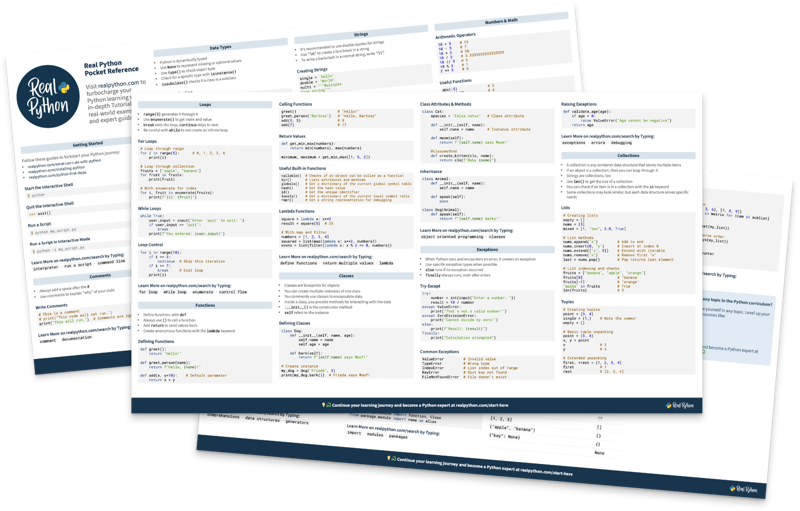
Download

Course Slides (.pdf)

5.9 MB
Download

Sample Code (.zip)

6.0 KB

00:00 Defining Python Constants for Code Maintainability

00:04 In programming, the term constant refers to names representing values that don’t change during a program’s execution. Constants are a fundamental concept in programming, and Python developers use them in many cases, but Python doesn’t have a dedicated syntax for defining constants and in practice, Python constants are just variables that never change.

00:27 To prevent programmers from reassigning a name that’s supposed to hold a constant, the Python community has adopted a naming convention of using uppercase letters. For every Pythonista, it’s essential to know what constants are, as well as why and when to use them.

00:42 So in this course, you’ll learn how to: properly define constants in Python, identify some built-in constants, use constants to improve your code’s readability, reusability, and maintainability; apply different approaches to organize and manage constants in a project, and use several techniques to make constants strictly constant in Python.

01:05 By learning to define and use constants, you’ll dramatically improve your code’s readability, maintainability, and reusability.

01:14 To get the most from this course, you’ll need basic knowledge of Python variables, functions, modules, packages, and namespaces. You’ll also need to know the basics of object-oriented programming in Python.

01:28 Any code that you see running in the REPL will be using the Bpython interpreter. This is a replacement Python interpreter that offers a number of enhancements, including code highlighting and suggestions.

01:39 But any code you see running on screen will work in the Python REPL, which is typically accessed by typing python or python3 at your terminal or command-line prompt.

01:49 So now you know what’s going to be covered, let’s get started.

Become a Member to join the conversation.